On 7 January 2026, during PMQs, a Conservative MP put a question to the Prime Minister:
"The Prime Minister promised not to bulldoze the countryside, but under Labour, green fields ... are now under threat. Does he accept that his housing target can be met without destroying our farmland and countryside by reusing empty homes and brownfield land?"
The Prime Minister's reply was unequivocal:
"We will not plough through farmland; we will make sensible proposals to build houses."
That statement should carry weight in Sheffield. The City Council's Local Plan proposes to release 232 hectares of Green Belt land, of which around three quarters (73.4%) is farmland.
Every part of Sheffield deserves fair, evidence-based planning. But fairness requires proportionality - and on any objective reading of the Council’s figures, S13 is bearing a far greater share of farmland loss than any other area.
S13: bearing the heaviest burden
Two sites in S13 - Handsworth Hall Farm (SES29) and Bramley Common (SES30) - together account for 1,697 of the 3,906 homes proposed on Green Belt across all of Sheffield. That is 43.4% of the entire city's Green Belt housing allocation concentrated in Handsworth, S13.
The S13 sites at a glance
Handsworth Hall Farm: 870 homes on 36.9 hectares, all 36.9 ha classified as farmland. The site is also earmarked for 20 ha of employment land - again entirely on farmland.
Bramley Common: 827 homes on 35.3 hectares, of which 32.9 ha is farmland (about 93%). The plan also includes a cemetery and a secondary school.
Combined, these two sites would destroy 70 hectares of farmland - more than the farmland loss from all other housing sites in the plan put together.
When SES29's employment-site farmland is added, S13 loses 90 hectares of farmland - over half of the 170.3 hectares of farmland the plan sacrifices city-wide. This is not a proportionate share. It is the opposite of "sensible proposals".
The full picture: housing planned on Sheffield's Green Belt
The table below comes from the Council's own site allocation documents. S13 sites are highlighted.
| Site Ref | Site Description | Homes | Gross Area (ha) | Farmland (ha) |
|---|---|---|---|---|
| CH05 | Land east of Chapeltown Road | 549 | 19.6 | 19.6 |
| NES37 | Land south of Wheel Lane / Creswick Avenue (+ cemetery, 2 schools) | 592 | 29.8 | 29.8 |
| NES38 | Land west of Grenoside Grange / Holme Lane Farm | 188 | 6.7 | - |
| NES39 | Land at Wheel Lane and Middleton Lane | 66 | 5.3 | - |
| NWS30 | Forge Lane, Oughtibridge | 69 | 2.6 | - |
| NWS31 | Storth Lane / School Lane, Wharncliffe Side | 103 | 3.8 | - |
| SES29 | Handsworth Hall Farm, Handsworth | 870 | 36.9 | 36.9 |
| SES30 | Bramley Lane / Beaver Hill Road, Handsworth (+ cemetery, school) | 827 | 35.3 | 32.9 |
| SS19 | White Lane, Gleadless Townend | 304 | 10.8 | 10.8 |
| SWS18 | Lodge Moor Road, Lodge Moor | 258 | 9.2 | 9.2 |
| SWS19 | Parkers Lane, Dore | 80 | 2.4 | - |
| TOTAL | 3,906 | 162.4 | 139.2 |
Source: Sheffield City Council. S13 sites highlighted in green.
In addition, 69.6 hectares of Green Belt are allocated for employment sites, of which 31.1 hectares is farmland - including 20 hectares at Handsworth Hall Farm (SES29) in S13.
Taken together, the housing allocations account for 139.2 hectares of farmland, and the employment allocations a further 31.1 hectares - a combined total of 170.3 hectares.
The Prime Minister's promise versus Sheffield's plan
The Prime Minister's words were unambiguous. He said: "We will not plough through farmland."
Sheffield's Local Plan does precisely that. Of the 232 hectares of Green Belt land earmarked for release (housing + employment), 170.3 hectares - 73.4% - is farmland. In S13 alone, the plan would destroy 70 hectares of farmland for housing, and 90 hectares including the employment allocation. This is not marginal or incidental farmland loss. It is the wholesale conversion of open, productive countryside into development land.
A question for every Sheffield councillor
If the Prime Minister has told Parliament the Government will not build on farmland, how can Sheffield's councillors vote to adopt a plan that does exactly that - destroying 170.3 hectares of it - and impose the heaviest cost on a single community?
A vote to adopt this plan is a vote to contradict the stated position of the Government - and to ignore the thousands of S13 residents who have already objected.
What is Handsworth Hall Farm?
Handsworth Hall Farm (SES29) is a large area of working Green Belt farmland at Orgreave Park, Handsworth. In the Sheffield Local Plan it is proposed for 870 new homes, plus 20 hectares of employment land.
This isn’t "empty land". Like many traditional farms, it is predominantly arable fields, but it also includes the features that make farmland function as a living landscape - hedgerows, small areas of woodland, and watercourses (streams/ditches), as well as a pond.
An ecology report prepared for the land warns that development on this scale would cause major habitat loss, and that it would be difficult to replace what is being lost within the site itself - meaning it would need to be "made up for" elsewhere.
What is Bramley Common?
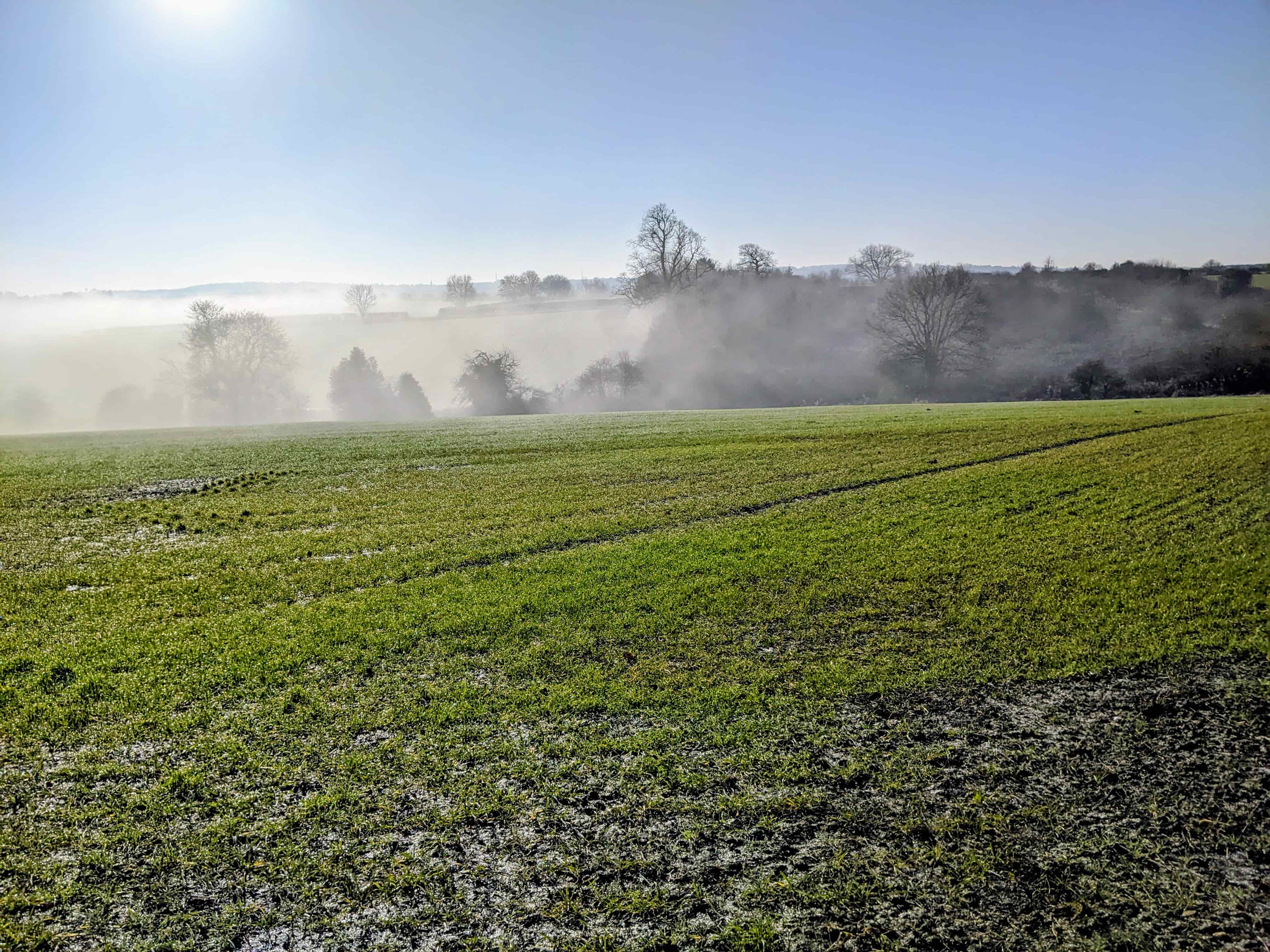
Bramley Common (SES30) is the single largest housing allocation in the plan, at 827 homes on 35.3 hectares. It is predominantly open, undeveloped farmland between Bramley Lane and Beaver Hill Road. It has never been built on and is intact Green Belt.
This goes directly to the heart of the Prime Minister's point: avoiding the needless loss of farmland where there are reasonable alternatives and more sustainable options. There is nothing "sensible" about selecting the city's largest undeveloped farmland site for the city's biggest housing allocation.
There is a further concern. Maps suggest Bramley Common is likely Grade 3 agricultural land, which may include Grade 3a - officially “Best and Most Versatile” (BMV). This is the country’s most productive farmland and receives the highest level of protection in planning policy. Yet the Council has not assessed whether the land is BMV. Instead, it has deferred the survey to the planning application stage - meaning the Council proposes to allocate the site first and only then check if the land can be built on. That is not just poor planning; it is exactly the kind of outcome the Prime Minister’s words should prevent.
What we are asking councillors to do
Thousands of people in S13 have already objected to this plan. Local councillors David Barker and Mike Drabble have formally requested this site be removed. Clive Betts MP - S13's Member of Parliament - voiced his concerns at the public hearings. This is not a fringe position. It is the settled view of a community.
We are asking every Sheffield City councillor to consider three things before casting their vote:
- The Prime Minister's own words. "We will not plough through farmland." A vote to adopt this plan in its current form is a vote to plough through 170 hectares of farmland. Councillors representing a Labour-led authority should not be acting in direct contradiction of the Prime Minister's stated policy.
- The disproportionate impact on S13. Two sites in one postcode account for 43.4% of all Green Belt housing and over half of all farmland lost. That is not a fair distribution. It is a plan that places a markedly greater burden on one community than on the rest of the city.
- The necessary evidence is not there. Brownfield sites, empty homes, and more sustainable locations should be genuinely prioritised - as both the NPPF and the Prime Minister require - before Green Belt is considered. Yet the Council has not even assessed whether the S13 site is “Best and Most Versatile” (BMV) farmland - the most productive land in the country, which national policy is intended to protect most strongly. Without that basic evidence gathered and taken into account, the plan cannot be considered sound.
This is not just an S13 issue. It is a Sheffield issue. Every community facing Green Belt release deserves the same standards of evidence, the same protection for productive farmland, and the same consideration of alternatives.
Make your voice heard
This plan will come before Sheffield's full council for a vote. Before it does, councillors need to hear from you - clearly, firmly, and in numbers they cannot ignore.